


Can You Include Religious Traditions in a Non-Religious Baby Naming Ceremony?
Filed under:
One of the questions I’m asked surprisingly often about planning a non-religious christening is: “We’re not religious, but our parents and grandparents are. They’d really love us to have our baby christened, but we’d prefer a non-religious ceremony. Is there a way to make everyone happy?”
My answer: “Yes! A modern baby naming ceremony can include some of the traditions and symbolism you love, without needing to be a religious service.”
If you’ve been searching for ideas for a non-religious christening, you’re certainly not alone. Many families today want to honour their cultural or family traditions while creating a ceremony that reflects their own beliefs.
Perhaps you no longer practise a particular faith, but still value the rituals you grew up with. Or maybe your extended family is deeply religious and you’d like them to feel included, even though a baptism or christening doesn’t feel right for your own little family.
A baby naming ceremony can beautifully bridge that gap — creating a meaningful celebration filled with love, symbolism and a sense of occasion, while keeping the focus on your child and the promises you want to make as parents.
If you’re looking for inspiration, these symbolic rituals can help create a christening alternative that’s both personal and memorable.
Here are some of my favourite ways to do it.
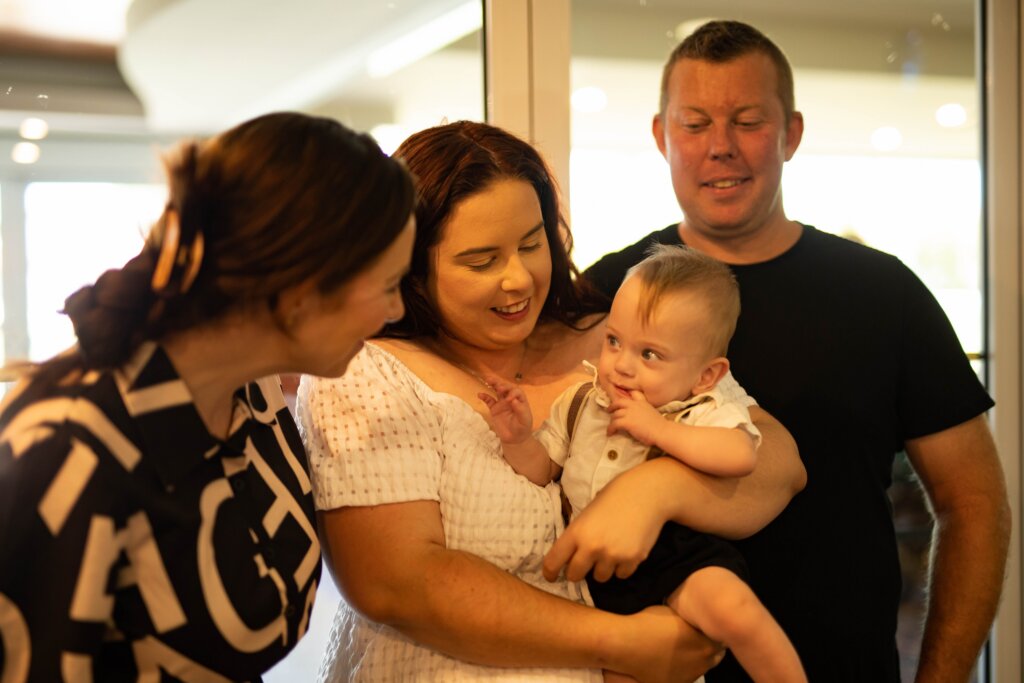
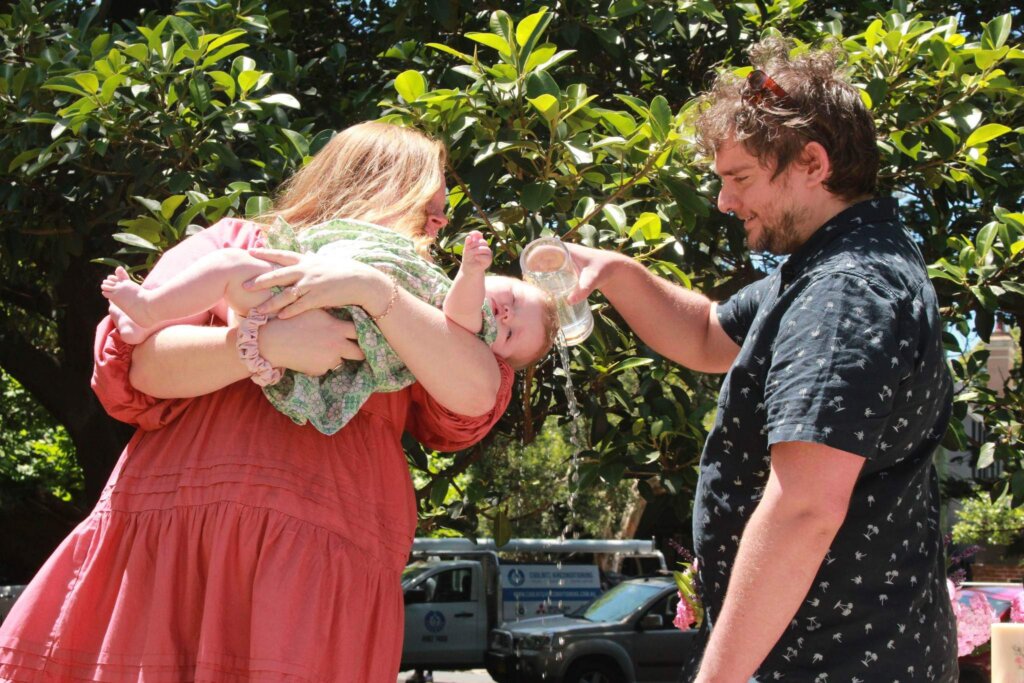
A Water Blessing During a Non-Religious Baby Naming Ceremony
This is probably my favourite.
Water has symbolised life, renewal and new beginnings across cultures for thousands of years, not just within Christianity.
Rather than baptising your child, we can invite the parents and perhaps the grandparents to dip their fingers into a bowl of water and gently touch the baby’s forehead or hands.
As they do, they might say: “May you always find strength in difficult times, joy in simple moments, and love wherever life takes you.”
Or each person could simply offer a single word of hope:
- Love
- Courage
- Kindness
- Wisdom
- Hope
It’s a beautiful nod to the symbolism of baptism without making it a religious ritual.
A Family Blessing Circle
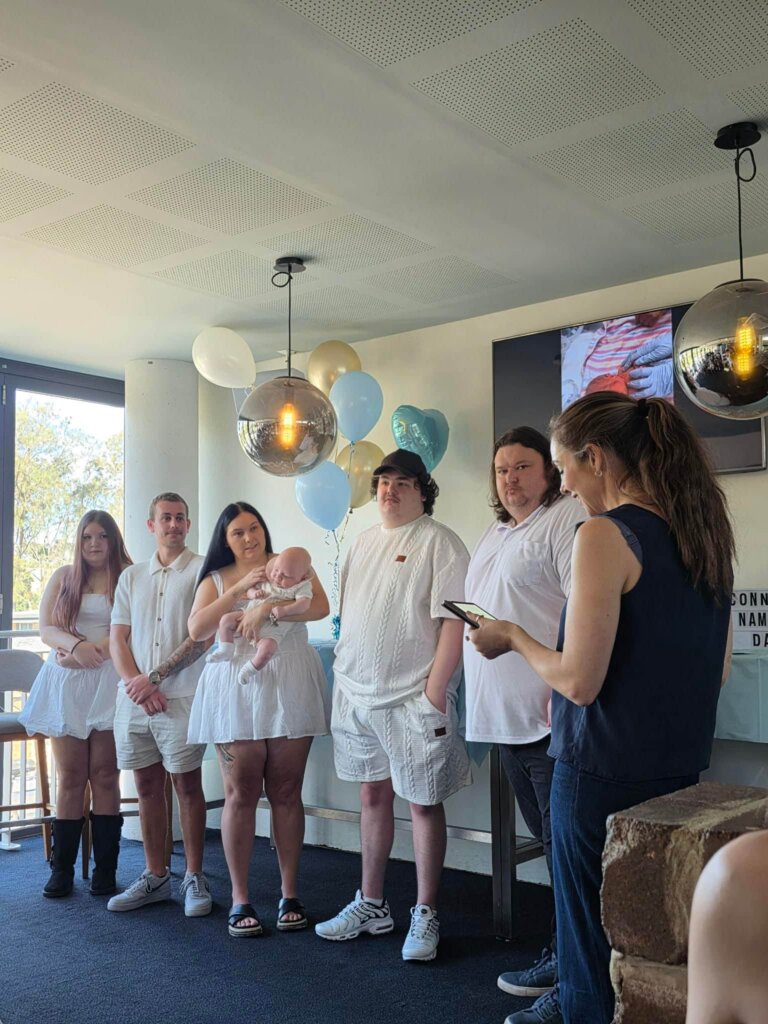
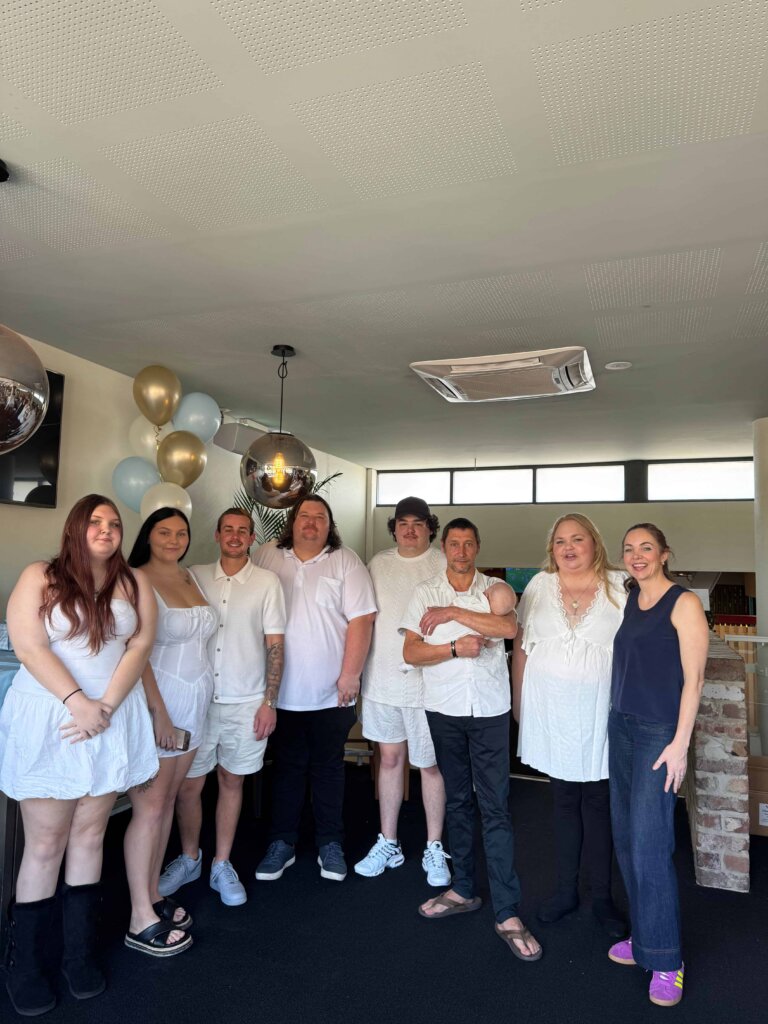
One of the loveliest moments in a naming ceremony is inviting the people who love your child most to share a few words of blessing or encouragement.
Grandparents, guideparents, godparents or other important family members can each offer a simple sentence such as:
“May you always know how deeply you are loved.”
“May your heart remain kind.”
“May your family always be your safe place.”
It has the warmth and rhythm of a blessing without needing to be a prayer.
A Candle Ceremony
Lighting a candle is one of those timeless traditions that feels special regardless of faith.
The parents might light a large family candle first, followed by grandparents or godparents lighting smaller candles from the same flame.
You could say:
“A single flame becomes brighter when its light is shared. May each person here help light your path throughout life.”
It’s simple, elegant and wonderfully symbolic.
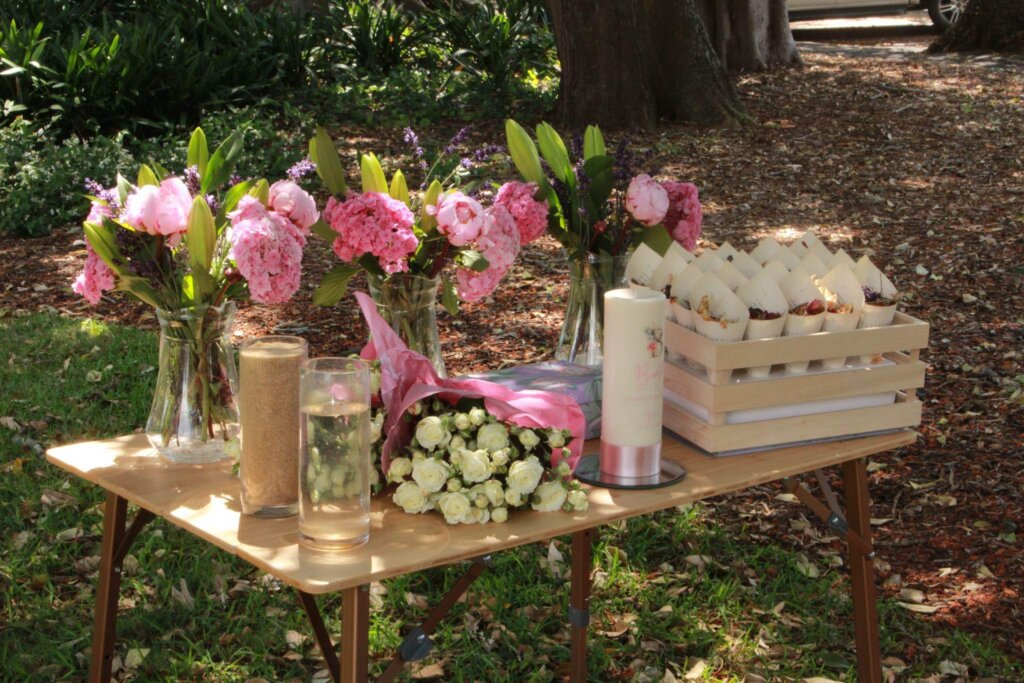
Godparents, Guideparents or Mentors
Many parents don’t realise there’s absolutely nothing stopping them from including godparents in a non-religious christening ceremony. If the title feels meaningful to your family, use it.
If you’d prefer something different, you might choose Guideparents, Guardians or Mentors instead.
Whatever you call them, their role remains beautifully important.
Ask them: “Will you promise to be someone this child can always turn to for guidance, encouragement and unconditional love?”
Together they reply: “We will.”
It’s a wonderful way to acknowledge the important people who’ll help shape your child’s life.
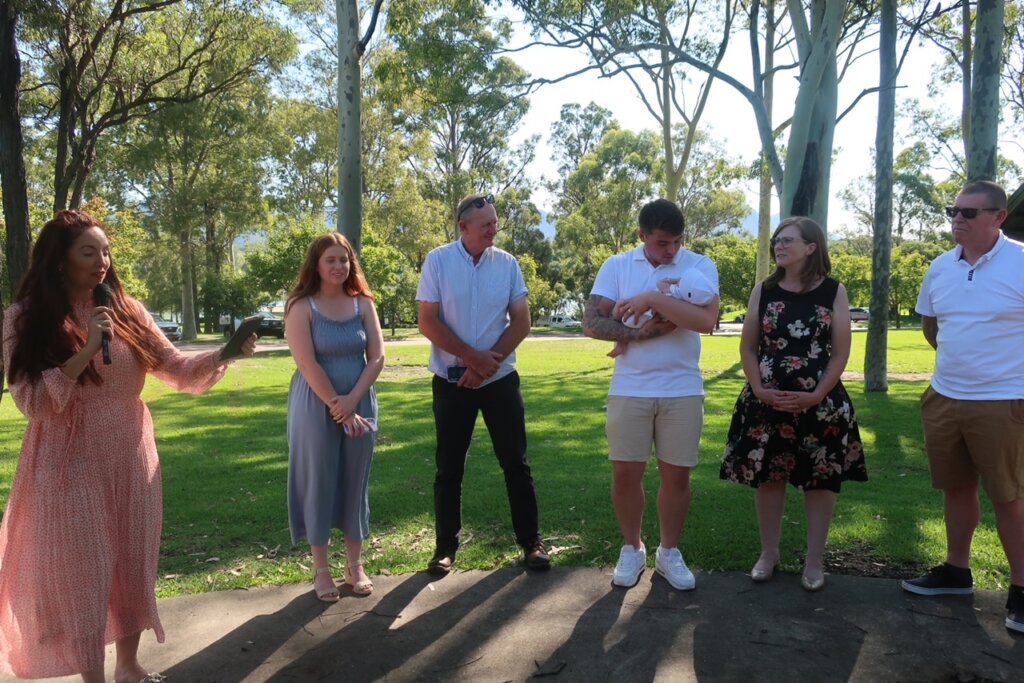
A Grandparents’ Blessing During a Non-Religious Baby Naming Ceremony
For many families, grandparents play a central role in passing down traditions, stories and values. Invite each grandparent to gently place a hand on the baby (or on the parents if the baby has had enough of being held!) and offer one sentence of wisdom, hope or blessing.
It can be an emotional moment.
Sharing Bread and Wine During a Non-Religious Baby Naming Ceremony
Many cultures celebrate life’s important milestones by gathering around food.
Rather than recreating communion, you might simply invite everyone to share bread, raise a glass and celebrate together after the ceremony.
It’s a lovely reminder that some of life’s most meaningful traditions are simply about gathering the people we love.
Ringing a Bell During a Non-Religious Baby Naming Ceremony
A small handbell can mark the moment your child’s name is officially welcomed into the world.
As the bell rings, I might say:
“Today we celebrate the beginning of another wonderful chapter in your story. May your name always be spoken with love.”
It’s a simple tradition that creates a surprisingly memorable moment.
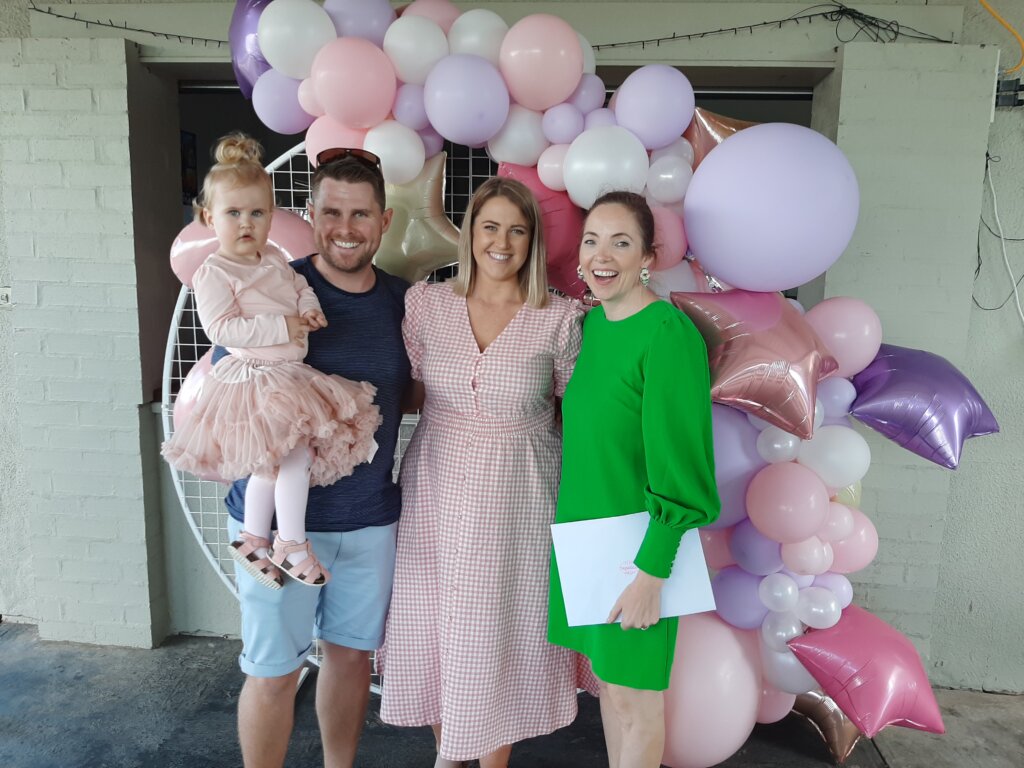
Borrow the Language, Not the Religion
Sometimes it’s the language of a ceremony that feels familiar rather than the rituals themselves.
Phrases like these carry warmth and meaning without becoming prayers:
“We gather today to bless…”
“May this child always…”
“May they be surrounded by grace…”
“May love guide your steps.”
These gentle expressions honour the spirit of family blessings while remaining inclusive of everyone’s beliefs.
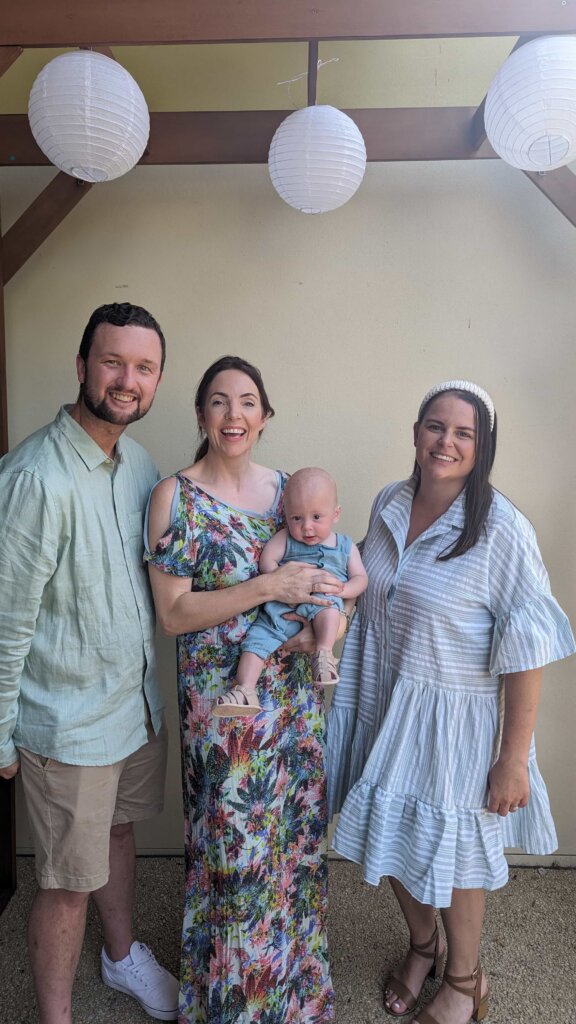
The Best of Both Worlds
One of the things I love most about baby naming ceremonies is that there are no rigid rules. Every ceremony is built around the family standing in front of me.
Some include poems, others involve grandparents, some have music, symbolic rituals or keepsakes. Every ceremony is unique because every family is unique.
Whether you call it a baby naming ceremony or a non religious christening, the most important thing is that the ceremony reflects your family and the values you want to celebrate.
If your loved ones were hoping for a christening, there are many thoughtful ways to acknowledge the traditions that matter to them without compromising your own beliefs.
The result is often something even more meaningful—a ceremony that celebrates not only your child’s arrival, but also the love, history and values that have shaped the generations before them.
After all, a baby naming ceremony isn’t about welcoming your child into a particular faith. It’s about welcoming them into a family, a community and a lifetime of unconditional love.
If you’re looking for baby naming inspiration, check out my baby naming blogs.
| |||||||||||||||||||||||